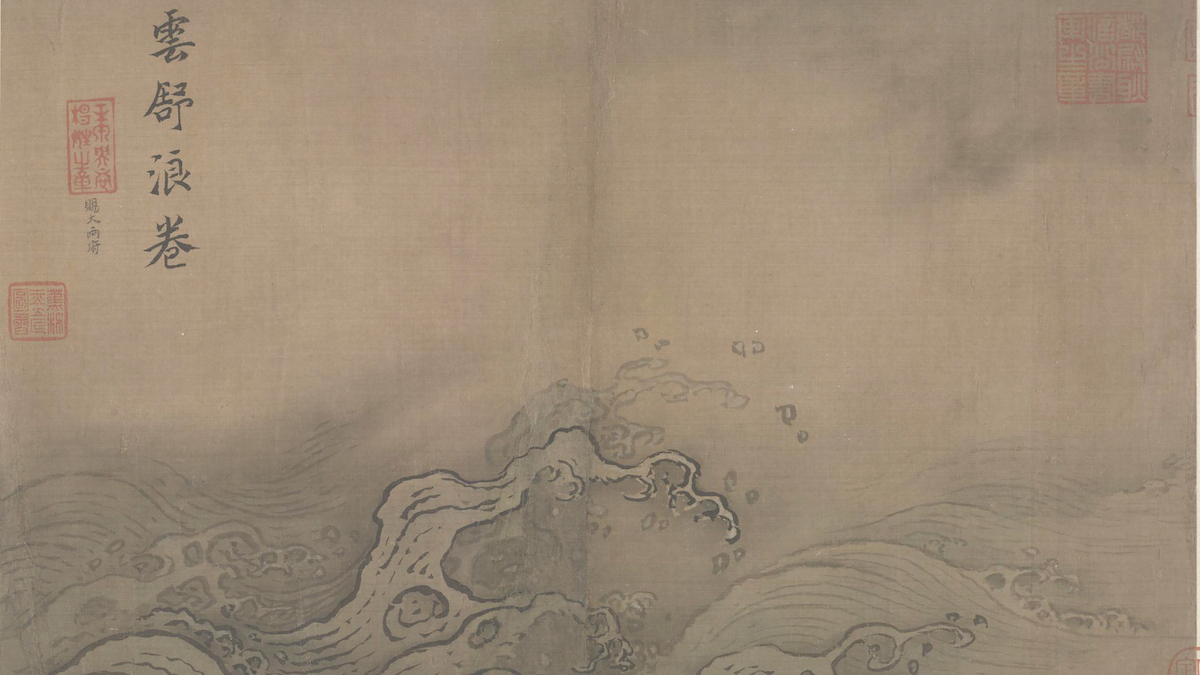
Ma Yuan
Introduction
Ma Yuan was a prominent Chinese landscape painter of the Southern Song Dynasty, celebrated for his exquisite paintings that often depicted serene and poetic landscapes. He was born around 1160 and passed away in 1225, and hailed from a family of painters, which influenced his artistic path. His work is characterized by a unique style that blends naturalistic detail with evocative simplicity, favoring minimal composition and the use of white space to convey a sense of vastness and introspection. Renowned for capturing the essence of water, Ma Yuan's paintings have been admired for their dynamic brushwork and delicate depictions of nature. His legacy continues to influence Chinese art, and his pieces are considered timeless representations of Song Dynasty artistry.
Early Life and Background
Ma Yuan was born into a family with a rich artistic legacy in the capital of the Southern Song Dynasty, Lin'an, present-day Hangzhou. His grandfather and father were both accomplished painters at the imperial court, and this family tradition of art provided Ma Yuan with a solid foundation in painting from an early age. Little is known about his personal life, but it is evident that the artistic environment in which he was raised played a crucial role in shaping his career. His early exposure to traditional Chinese painting techniques and styles allowed him to develop his own distinctive approach, which he would later refine and popularize. The rich cultural and artistic environment of Hangzhou, combined with the influences from his family, set the stage for Ma Yuan's future contributions to the world of art.
Career
Ma Yuan's career was largely centered around his service as a court painter, where he gained recognition and fame for his refined brushwork and innovative use of composition. He was associated with the Ma-Xia school, named after himself and his contemporary, Xia Gui, which is noted for its unique approach to landscape painting.
Artistic Style and Techniques
Ma Yuan's artistic style is characterized by his partial-focus compositions, where the subjects are often placed in one corner or side of the painting, leaving vast areas of negative space. This technique, known as "one-corner" painting, became a hallmark of his work and was instrumental in creating a sense of depth and vastness. His brushwork is noted for its precision and fluidity, capturing the essence of nature with minimal detail. Ma Yuan's use of ink washes and delicate lines to depict mountains, rivers, and other natural elements showcases his skill in balancing simplicity with complexity. His ability to convey mood and emotion through the interplay of light and shadow, and the strategic use of white space, demonstrates a deep understanding of the natural world and traditional Chinese aesthetics.
Notable Works
Among Ma Yuan's most celebrated works is the series titled Water Studies, which exemplifies his mastery in depicting water in various states and moods. Each part of the scroll focuses on a different aspect of water, showcasing his keen observation and delicate brushwork. Another notable piece is Fisherman in Reclusion on an Autumn River, which captures the quietude and solitude of a lone fisherman amidst an expansive landscape. This work, like many others by Ma Yuan, reflects his ability to blend the physical and spiritual aspects of nature, offering viewers a window into the introspective and meditative qualities of the natural world.
Influence and Legacy
Ma Yuan's influence extends beyond his lifetime, as his techniques and stylistic innovations have continued to inspire generations of artists. The Ma-Xia school, which he co-founded with Xia Gui, laid the groundwork for future Chinese landscape painting, emphasizing simplicity, emotional resonance, and the use of negative space. His approach to composition and his ability to evoke atmosphere have been echoed in the works of later artists and have left a lasting imprint on the art world. Ma Yuan's legacy is evident not only in traditional Chinese painting but also in contemporary interpretations and adaptations that seek to capture the spirit of his work. His paintings remain revered for their beauty, technical skill, and their ability to convey profound philosophical and spiritual insights, making Ma Yuan a pivotal figure in the history of Chinese art.








